
Learning
Login to enroll in courses and start learning
LoginBlood Donation and Transfusion Management in India
Understand clinical standards, regulatory frameworks, donor selection, and blood bank operations.
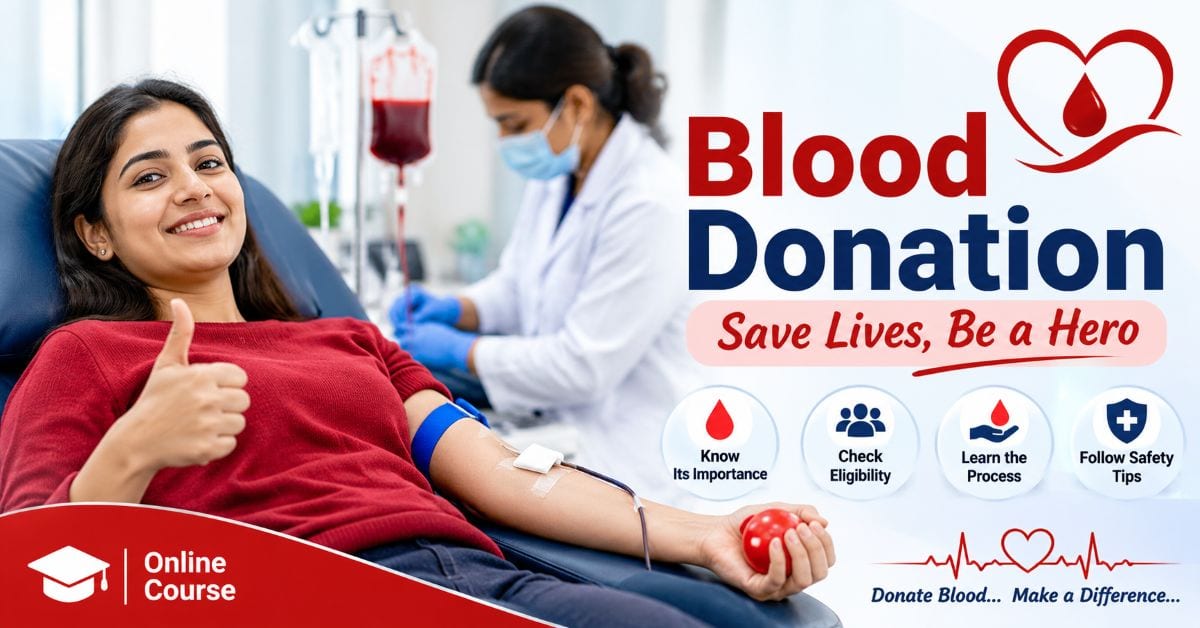
What you'll learn
- Evaluate donor eligibility based on physical parameters, age, weight, and blood pressure limits set by the NBTC.
- Apply correct statutory deferral periods for tattoos, minor/major surgeries, and recent transfusions.
- Identify the legal requirements governing blood banking under the Drugs and Cosmetics Act, 1940.
- Outline mandatory screening protocols for the five primary Transfusion Transmissible Infections (TTIs) in India.
- Differentiate whole blood donation intervals and volume thresholds from single-donor apheresis procedures.
- Utilize digital blood tracking processes and statutory data logging using the e-RaktKosh portal.
About this course
This course covers the essentials of blood donation, donor selection criteria, testing protocols, and regulatory oversight in India. Designed for healthcare professionals, students, and community organizers, it provides an in-depth explanation of the legal, clinical, and operational frameworks governing transfusion services.
Learners will examine donor eligibility requirements, medical deferral periods, mandatory TTI screening, and component preparation according to National Blood Transfusion Council (NBTC) guidelines. The course also details administrative processes, including digital tracking via e-RaktKosh and blood drive logistics.
This course focuses on donor selection, screening, regulatory standards, and logistics. It does not cover advanced bedside immunohematology, clinical transfusion medicine treatment plans, or specialized hospital surgical procedures.
Curriculum · 4 sections · 13 lessons
Legal Framework and Policy Governance
Understand the legal definitions, regulatory authorities, and national policies governing blood transfusion in India.
- Regulatory Framework: Drugs and Cosmetics ActPreview10m
- Institutional Oversight: NBTC and National Demand8m
- Module 1 Assessment: Regulatory Standards5m
Donor Selection and Eligibility Standards
Master the physiological requirements, age limits, and health parameters for whole blood and apheresis donors.
- Whole Blood Physical Eligibility Criteria9m
- Apheresis Criteria and Frequency Protocols8m
- Module 2 Assessment: Eligibility & Physical Criteria5m
Medical Deferrals and TTI Screening Protocols
Learn safety deferral timelines, window periods, and statutory screening for Transfusion Transmissible Infections.
- Temporary Deferral Timelines and Risk Factors10m
- Mandatory TTI Screening Standards10m
- Module 3 Assessment: Deferrals and Screening5m
Component Quality, Digital Tracking, and Operations
Understand component standards, inventory logging on e-RaktKosh, and drive logistics.
- Blood Component Quality and Standards8m
- Digital Inventory Management via e-RaktKosh9m
- Voluntary Blood Donation Camp Logistics9m
- Module 4 Assessment: Operations & Digital Systems5m
Requirements
- Basic understanding of human biology or healthcare fundamentals.
- Familiarity with community health initiatives or clinical support roles.
Ratings & reviews
Discussion
Login to join the discussion