
Learning
Login to enroll in courses and start learning
LoginFreeAgent for UK Small Business Keeping
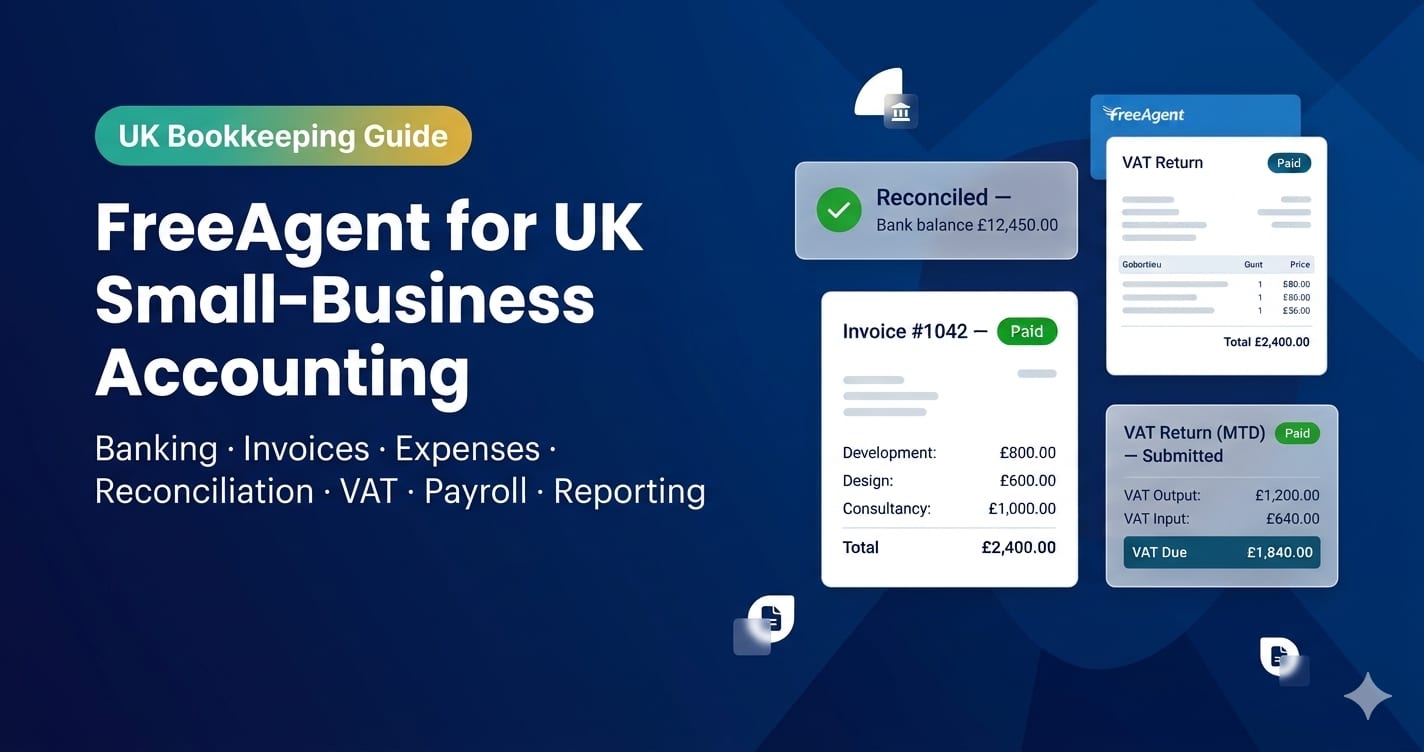
Learn how to manage UK small-business accounting using FreeAgent, including banking, invoicing, expense tracking, bank reconciliation, VAT, payroll records, tax records and financial reporting.
What you'll learn
- Understand FreeAgent and its accounting features.
- Connect bank accounts and import bank transactions.
- Create customer contacts estimates and invoices.
- Record credit notes and customer payments.
- Record business expenses and attach receipts.
- Categorise expenses correctly.
- Reconcile bank transactions with bank statements.
- Understand VAT settings and review VAT returns.
- Understand payroll links and tax records.
- Generate Profit & Loss, Balance Sheet and Cash Flow reports.
- Follow a monthly accounting workflow.
- Identify and correct common accounting errors.
About this course
This practical training course introduces students to FreeAgent, an accounting software used by UK small businesses, sole traders and limited companies.
Students will learn how to manage business banking, create estimates and invoices, record expenses, attach receipts, categorise transactions, reconcile bank statements and review VAT records. The course also covers payroll links, tax records, financial reports and monthly accounting workflows.
Through practical exercises and a fictional UK business case study, students will understand how to identify common accounting errors, correct transaction records and prepare accurate financial reports for an accountant.
Curriculum · 10 sections · 37 lessons
FreeAgent
- Lesson—
Section 1: Banking and Bank Feeds
- Connecting bank accounts.—
- Uploading statements.—
- Free access through some banks.—
- Opening balance and start date.—
Section 2: Contacts, Estimates and Invoices
- Contacts first.—
- Estimate to invoice.—
- Invoice essentials.—
- Credit notes, recurring invoices, reminders and online payments—
Section 3: Expenses, Receipts and Categories
- Recording or importing expenses.—
- Categorising by purpose.—
- Mileage, home-working and personal spend.—
- Capital items.—
Section 4: Reconciliation, Explaining Bank Transactions
- The goal.—
- The method.—
- Suggested matches and learned rules.—
- Proof at month end.—
Section 5: VAT Where Registered
- Registration and scheme.—
- Applying the right rate.—
- Reviewing the return.—
- Filing through MTD.—
Section 6: Payroll Links and Tax Records
- Built-in payroll.—
- External payroll tools.—
- Companies.—
- Sole traders and landlords.—
Section 7: Reporting
- Standard reports.—
- Dashboard and tax timeline.—
- Pre-report checks.—
- Exporting for the accountant.—
Section 8: Monthly Workflow and Case Study
- The monthly rhythm.—
- October close, the situation.—
- Diagnosis and fixes.—
- Outcome and discussion.—
Section 9: Errors, Checklist and Assessment
- Common errors.—
- Monthly checklist.—
- question quiz.—
- Answer review.—
Requirements
- Basic knowledge of accounting and bookkeeping.
- Basic understanding of debit, credit, income and expenses.
- Familiarity with invoices, receipts and bank transactions.
- Basic computer and internet browsing skills.
- No previous experience with FreeAgent is required.
Ratings & reviews
Discussion
Login to join the discussion